Theft of Fire
Leyla Faye
Through Oct242026
Company is pleased to announce Theft of Fire, Leyla Faye’s second solo exhibition with the gallery, featuring six mixed-media paintings and works on paper. The exhibition will be on view from September 10–October 24, 2026.
Theft of fire, a recurring motif across world mythologies, symbolizes the determined acquisition of knowledge and its transformative impact on civilization. Faye’s practice begins with research that moves fluidly through folklore and ancient storytelling, drawing from sources as varied as Greek and Roman mythology, Biblical narratives, Black folklore of the American South, tales depicted in Baroque and Medieval paintings and tapestries, Indigenous fables, and stories and games she invented as a child. For Theft of Fire, Faye turns her attention to a persistent archetype that emerges across these traditions: the trickster.
Inherently an outsider, the trickster is also a wanderer and shape-shifter, existing at the periphery of society. Transient by nature, the trickster is too restless to settle yet unable to fully control where or whether they belong. Rather than treating this isolation solely as a condition of exclusion, Leyla Faye’s subjects, each functioning as a facet of the self, locate within solitude a source of ecstasy and autonomy. Throughout this new body of work, playfulness and the grotesque appear side by side, converging in unexpected and often unsettling combinations.
Faye traces the trickster narrative back to childhood, recalling her early discovery that lying was possible, though never without consequence—a realization that revealed the power of inventing alternate realities. Children, the ultimate tricksters, can be playfully deceptive and deceptively imaginative, existing outside of the full constraints of the adult world. Painting becomes a natural extension of this condition: a practice of withdrawing from society while accessing a preverbal field of knowledge.
Faye’s painting and drawing practice continues to incorporate mixed media and peculiar dimensionality. Across the works in Theft of Fire, suggestions of intentional pentimenti—traces of earlier marks, revisions, and changes to an image—create a sensation of doubling, as though multiple versions of a scene coexist on the same surface. In the dense work on paper A Straw Dog’s Demise, 2026, Faye incorporates discarded matter to evoke birds constructing nests from human refuse. In Rabbit Hole, 2026, poly-fil introduces unexpected plushness to a rabbit caught in a trap, while painted fabric in Mercury Song, 2026, simulates folds of cloth draped over a cow. These material interventions evoke the tactility of early childhood touch-and-feel books while underscoring the complexity and mastery of craft across Faye’s surfaces.
Theft of Fire approaches Blackness, femininity, animality, and divinity as expansive and unstable conditions, capable of containing contradiction without resolution. Where does the trickster find belonging? Perhaps belonging is not a destination but a condition itself: the freedom to remain untethered, to refuse a fixed identity, and to discover bliss in the space between belonging and exile.
Selected Works
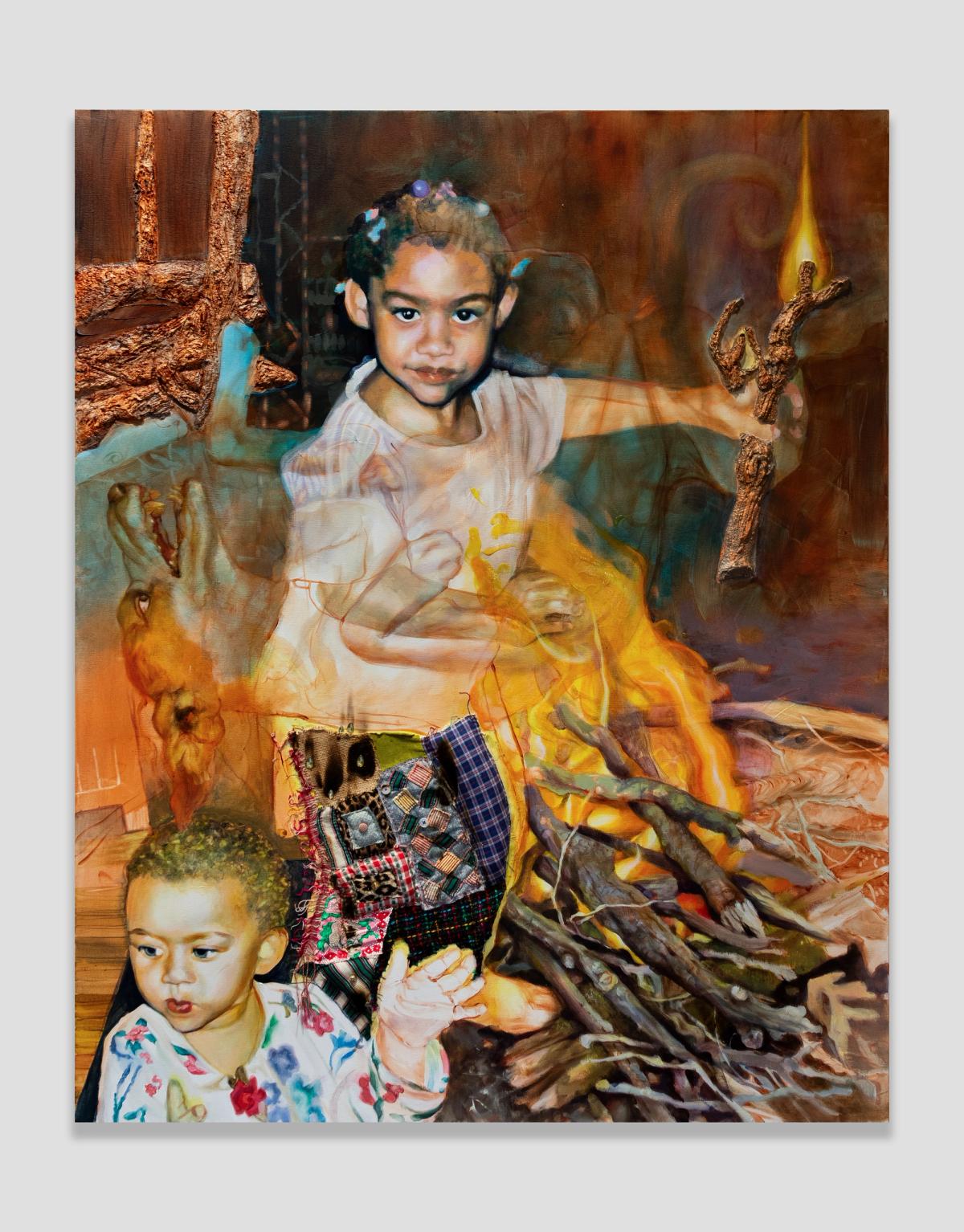
Leyla Faye
Theft of Fire,
2026
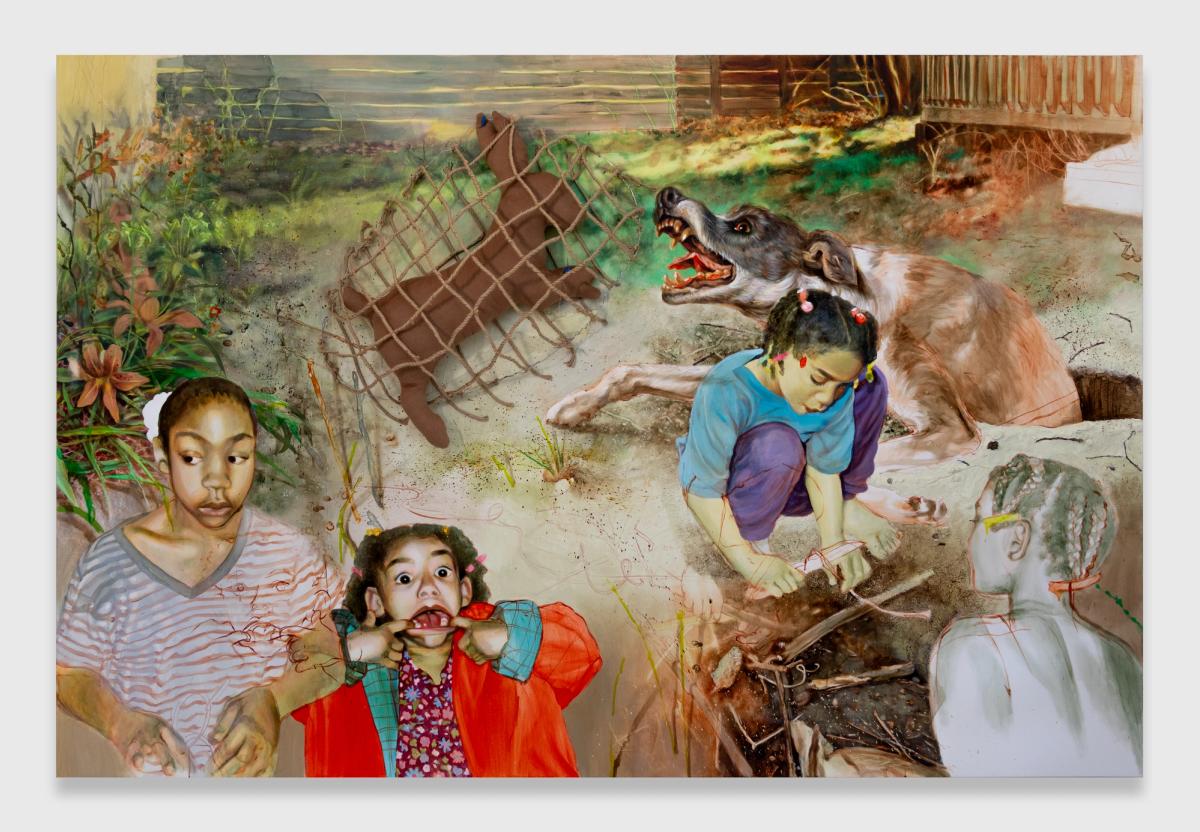
Leyla Faye
Rabbit Hole,
2026
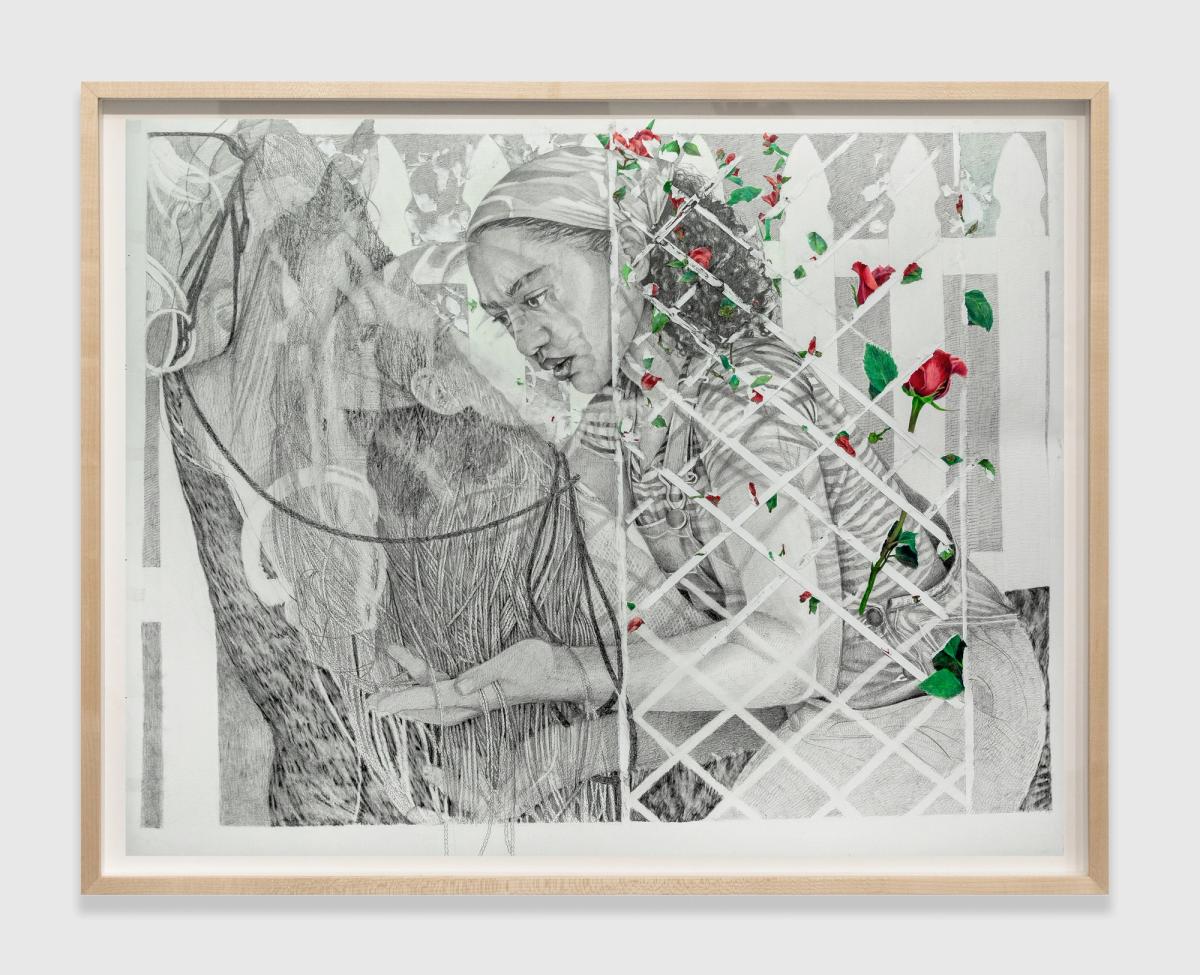
Leyla Faye
Saci's Knot,
2026
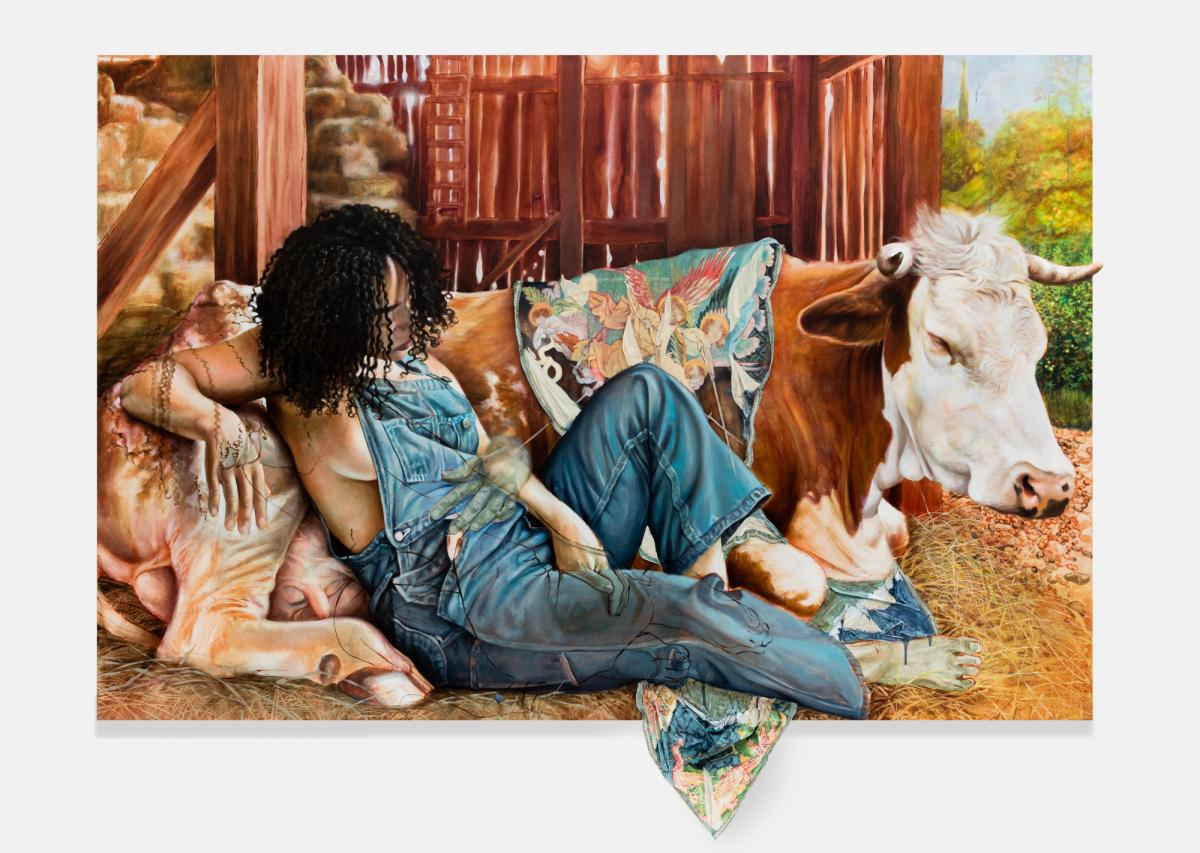
Leyla Faye
Mercury Song,
2026
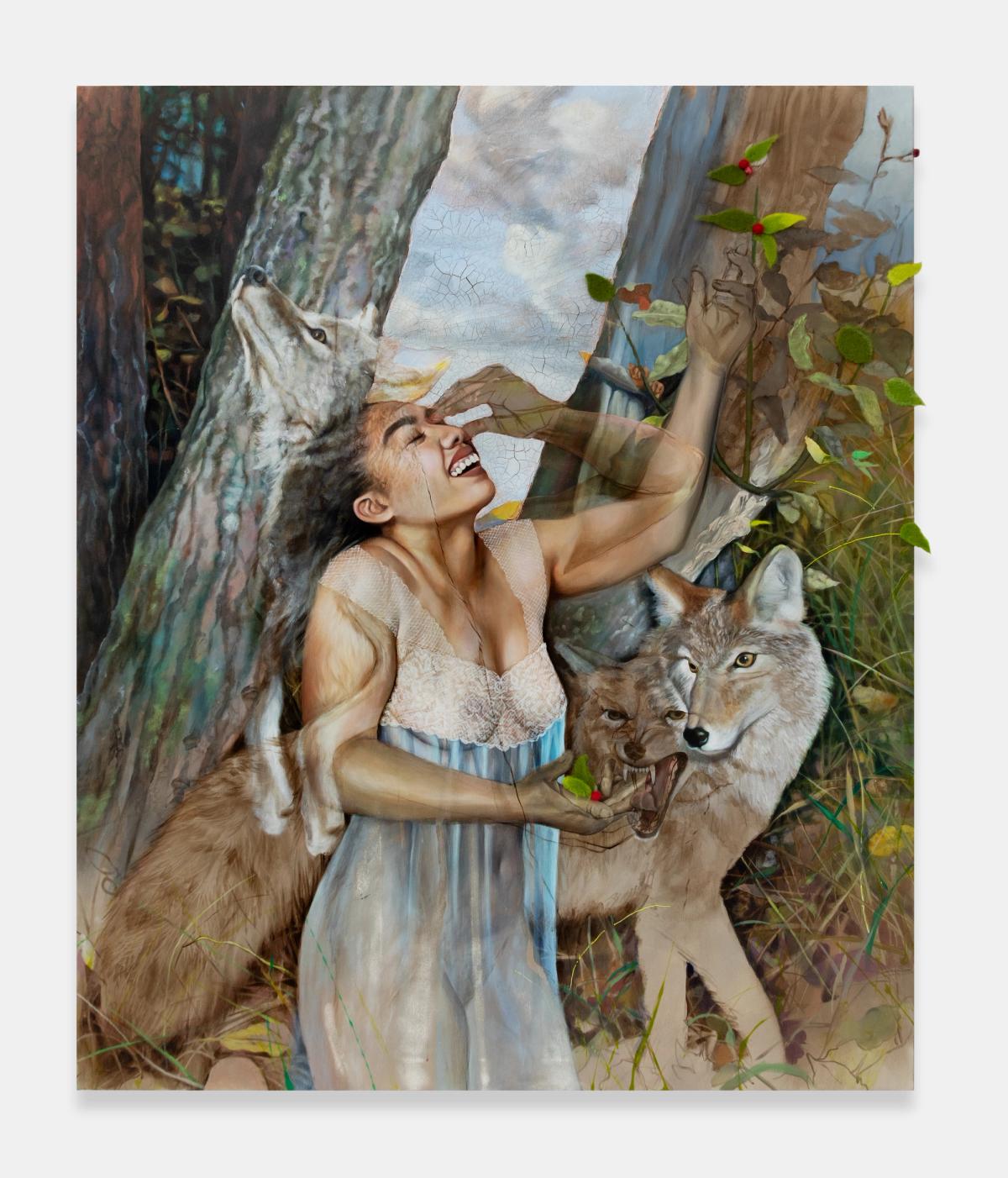
Leyla Faye
Silver Linings,
2026
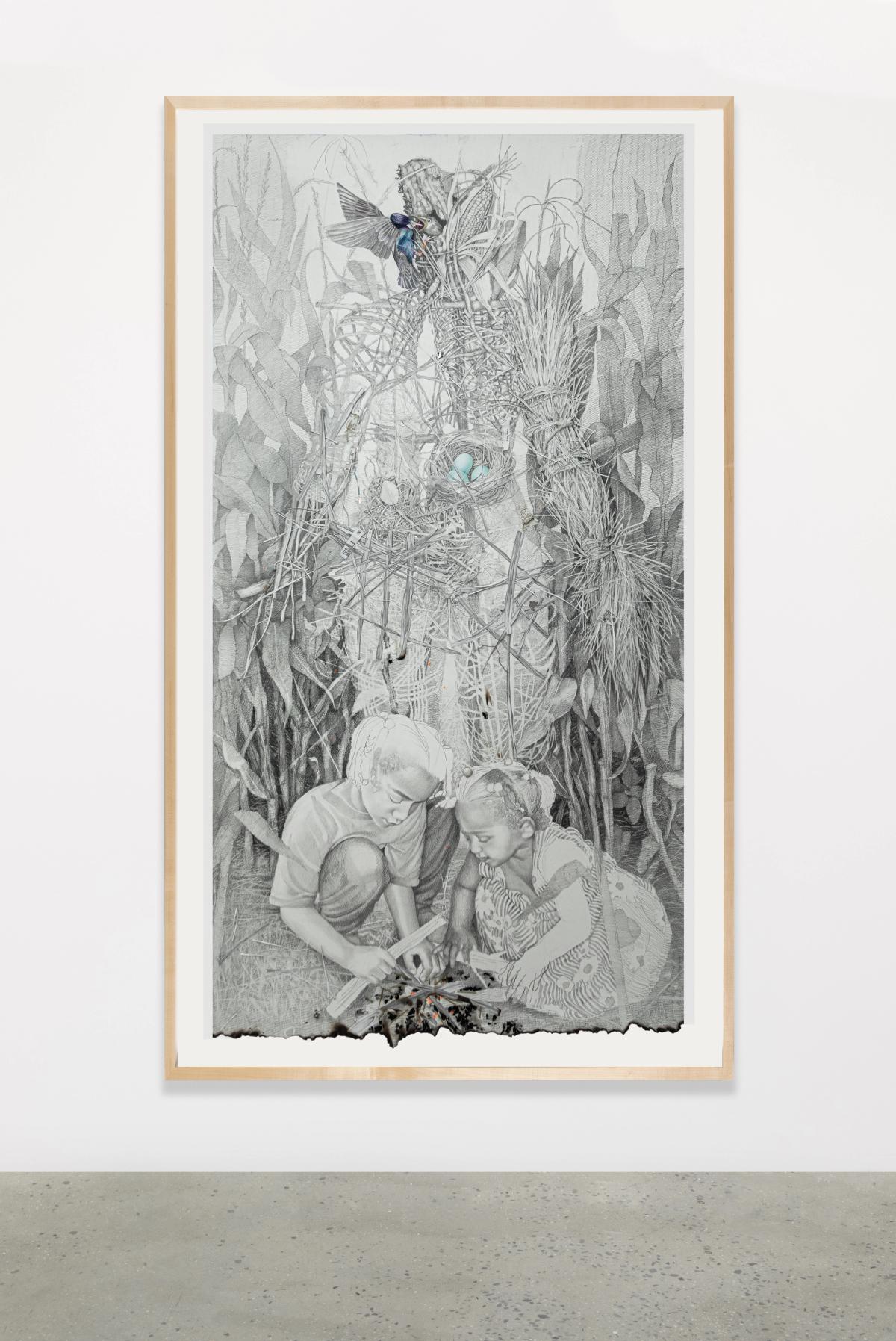
Leyla Faye
A Straw Dog’s Demise,
2026